
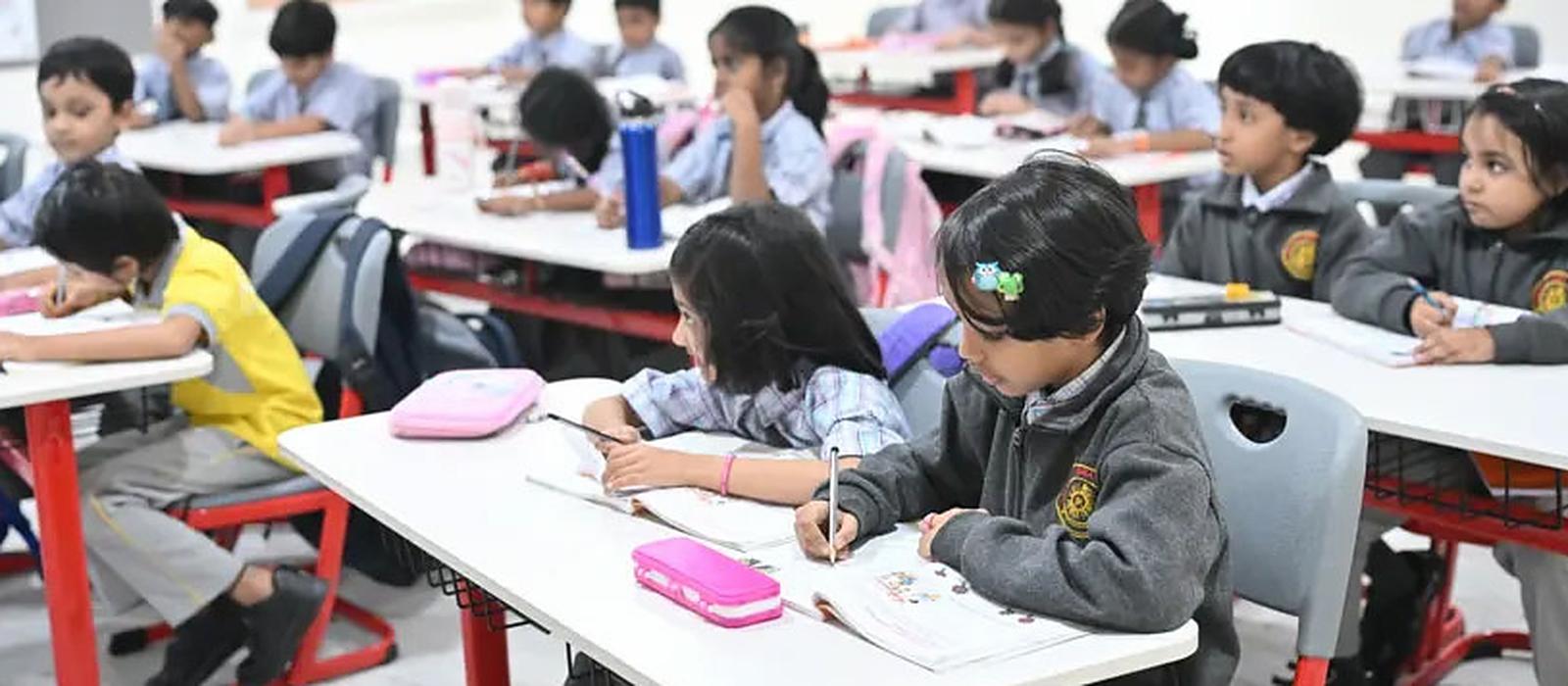
Assessment that helps children improve.
The purpose of assessment is not simply to rank children. It is to show teachers what to teach next, show children how to improve and show parents where their child stands.
Every day, in every lesson
Short, low-stakes checks happen constantly: oral questions, mini-whiteboard answers, quick quizzes, exit questions and observation of class work. These are not graded; they tell teachers instantly who has understood and who needs another explanation.
Feedback is specific and actionable — “show your working for step two” is more useful than “good” — and children are given time to act on it.
At key points in the year
Periodic tests and term examinations, together with projects, practicals, portfolios and oral assessments, measure what students have learned over a period of time. The balance of these components follows CBSE guidance for each stage.
Results are analysed to plan revision, provide targeted support and report clearly to parents.
How we assess at each age.
| Stage | Main methods | Reporting |
|---|---|---|
| Early Years (Nursery – UKG) | Observation during play, checklists, work samples, photographs, simple oral tasks. No formal written exams. | Descriptive progress reports and parent meetings |
| Grades 1 – 2 | Continuous class-based assessment, reading checks, activity sheets, oral and practical tasks. | Term progress reports with descriptive remarks |
| Grades 3 – 5 | Class work, projects, oral assessment, short periodic written assessments and term-end assessment. | Term reports with grades and teacher comments |
| Grades 6 – 8 | Periodic tests, half-yearly and annual examinations, practicals, projects, notebooks and subject enrichment activities. | Term reports, marks/grades and parent–teacher meetings |
Exact weightage, examination dates and grading scales are shared with parents at the start of each academic year and may be updated in line with CBSE circulars.
From test paper to progress.
- 01
Assess
A check, test or task reveals what each child can do.
- 02
Analyse
Teachers identify common errors and individual gaps.
- 03
Feed back
Children receive clear, specific guidance on how to improve.
- 04
Reteach & practise
Gaps are revisited and children practise until secure.
Less exam anxiety. More genuine confidence.
Because children are checked regularly in low-pressure ways, examinations become a chance to show what they already know rather than a source of fear. We teach revision strategies explicitly and avoid unnecessary comparison between children.
Parents can help by focusing on effort and improvement, keeping sleep and routines regular during exam periods, and talking with teachers early if their child seems worried.
How often will I receive a progress report?
Progress reports are shared at the end of each term, alongside parent–teacher meetings. Teachers will contact you sooner if there is a concern.
Do you follow CBSE competency-based questions?
Yes. Middle-school assessments include case-based, application and reasoning questions, and we practise these regularly in class.
What happens if my child misses an assessment?
Please inform the class teacher. Arrangements for missed assessments follow school policy and depend on the reason and type of assessment.
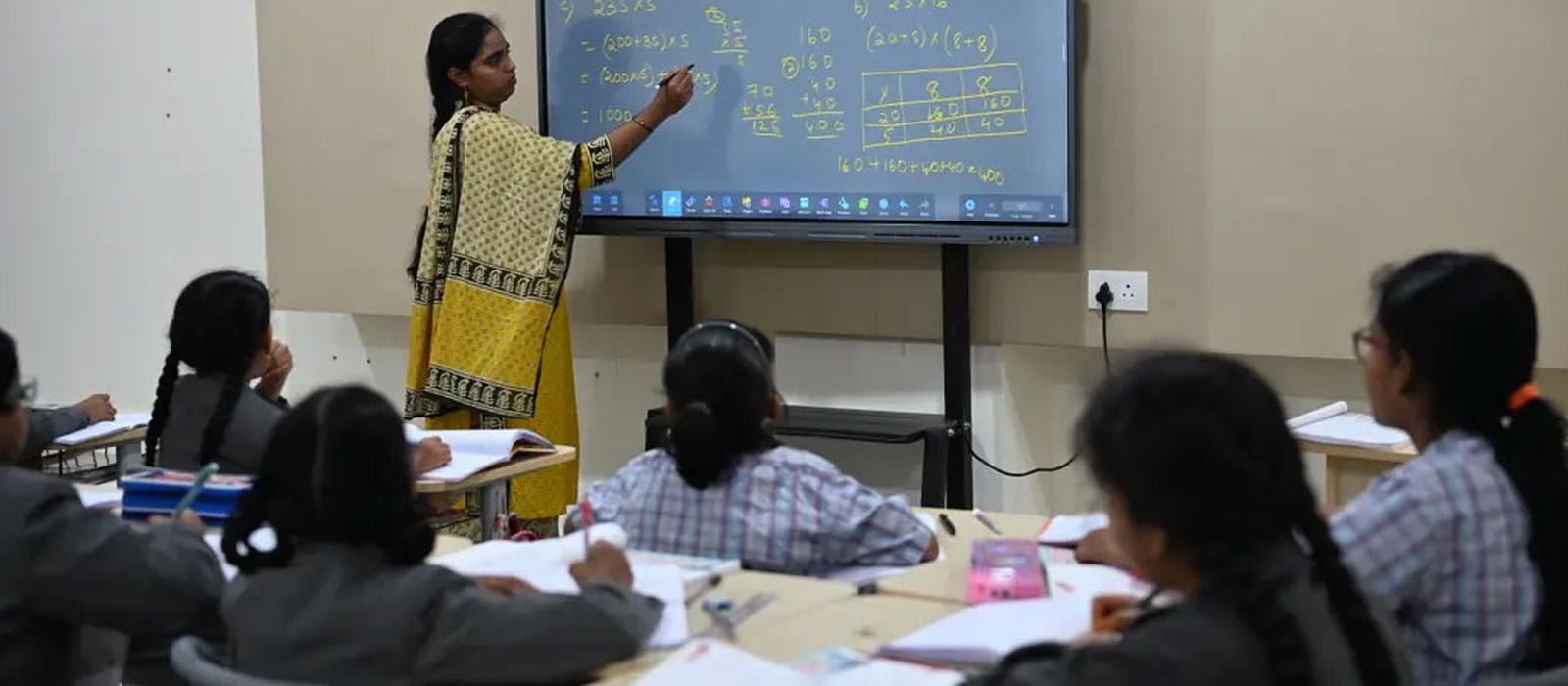

See the school. Meet the people. Imagine the possibilities.
A campus visit is the clearest way to understand how our classrooms work, how teachers speak with children and whether Arkaas is the right fit for your family.
